
Pat Farenga's Blog

FITTING ON THE TRACKS
At a meeting —very pleasant—of (mostly) sociologists at Harvard, someone said to me, "But if we educate children in the way you propose, how are they later going to fit on the tracks laid down by society?” The question showed me that he understood very clearly what schools are for—to make people think, as they had made him think, that the tracks that make a society of any particular moment are not only the best tracks, but the only possible tracks.

Schools and Homeschoolers: A Fruitful Partnership
There have always been some conventional and alternative schoolteachers who view John Holt’s work as a hopeful path for education. I hope that more will follow as declining enrollments, absenteeism, and public malaise about education have not been staunched by increasing standards, intensive instruction, and longer school days.
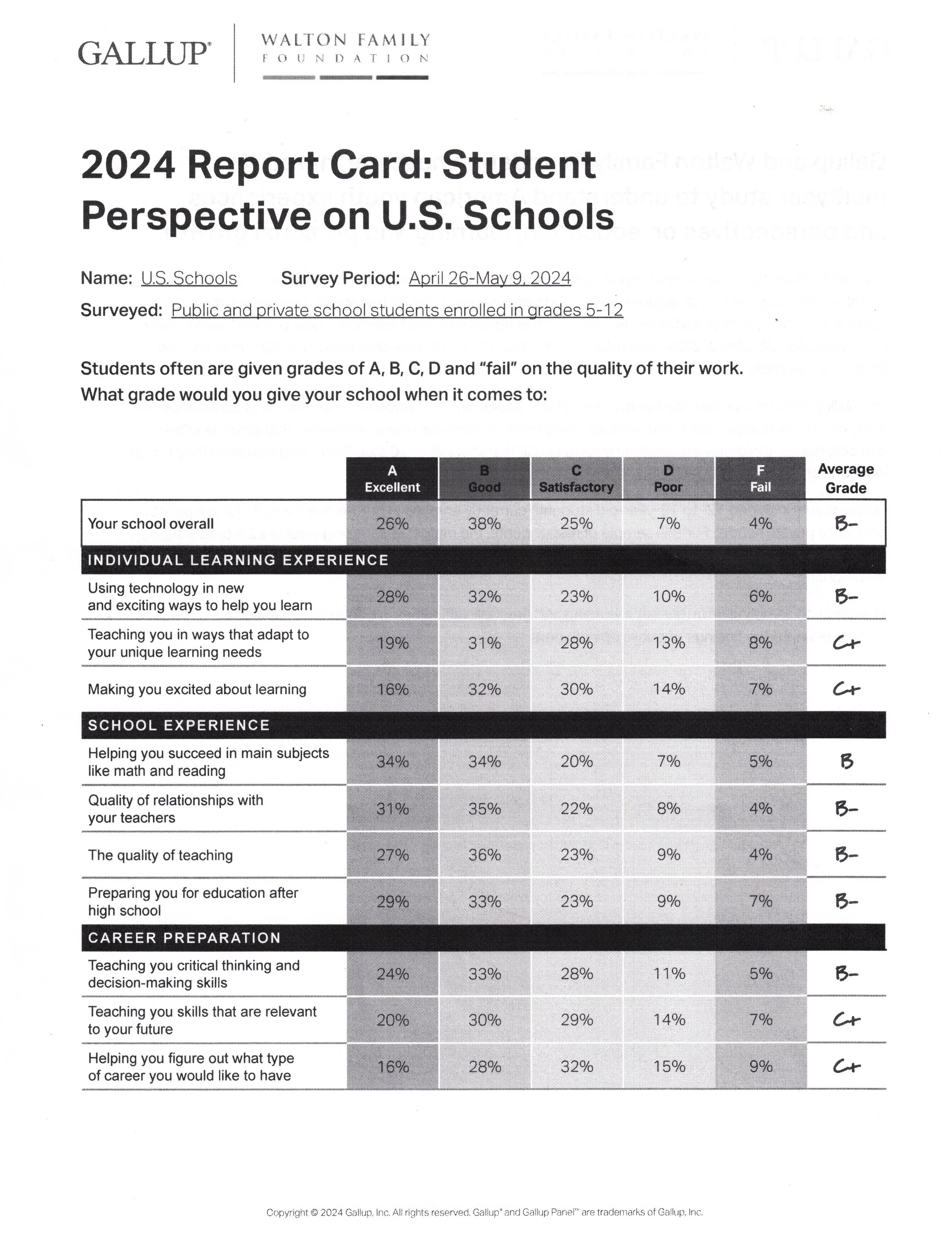
Students Grade U.S. Schools in Gallup Poll
Students give U.S. schools middling to poor grades, and the majority of parents are dissatisfied with their schools. Yet school continues to offer its one-size-fits-all approach as the way to fix things.
The Mathematics of the Ordinary
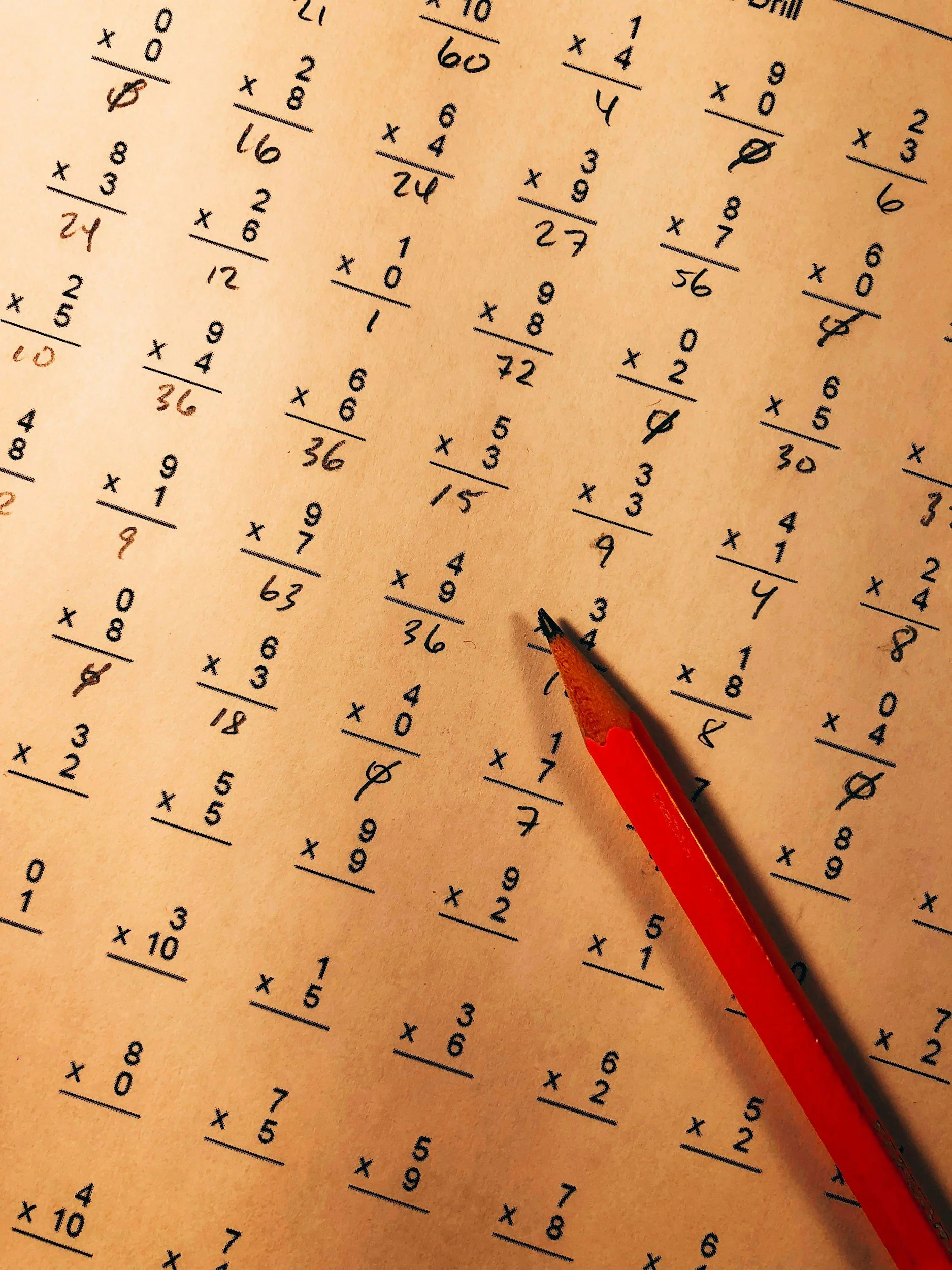
“The important question for me, given my view of mathematics of the ordinary, is not how it can be taught, but how it can be lived. I don’t think we need to find special “math-speaking” tutors when it comes to the mathematics of the ordinary. Most young children are not interested in becoming specialists in mathematics. But it is in their nature, indeed, in practically everyone’s nature, to wonder about the patterns and regularities they observe in the world.”—Aaron Falbel

The Cart and the Horse
Just as school is not really an effective preparation for life, neither should life be considered a preparation for school.
When School Makes Freedom Just a Motivational Device
Samuel Bowles and Herbert Gintis wrote in Schooling in Capitalist America in 1976, ‘“In less than a decade, liberal preeminence in the field of educational theory and policy has been shattered. . . . Today, much of the free school rhetoric has been absorbed into the mainstream of educational thinking as a new wrinkle on how to get kids to work harder.”
